Kim Sacks, the potter who built a gallery around other makers
Kim Sacks has taught clay in Johannesburg since 1986. Her gallery on Jan Smuts Avenue sets old African objects beside new work by makers from city and village alike.
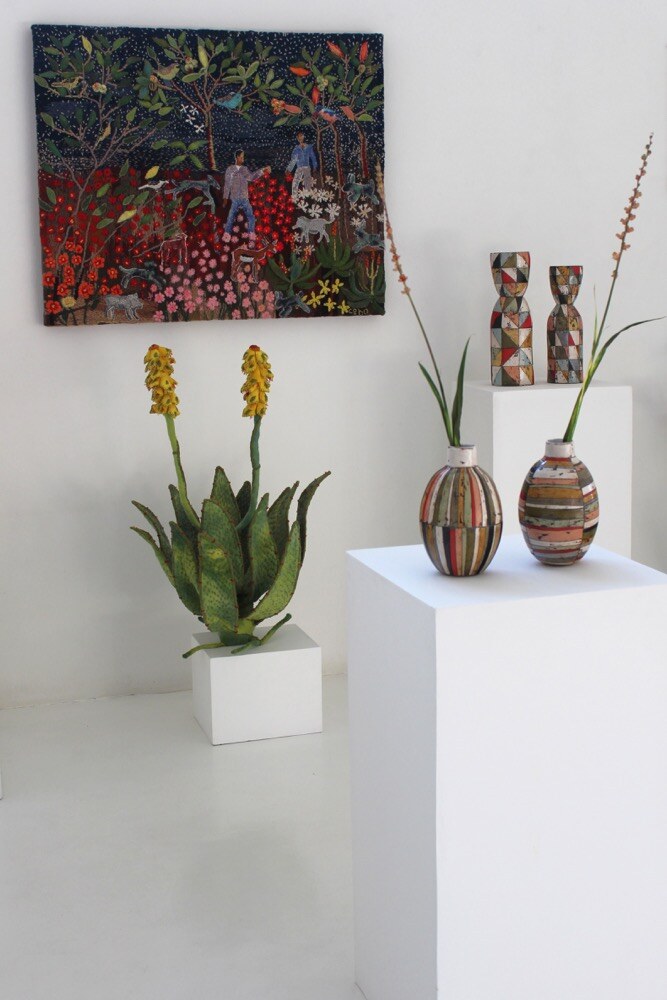
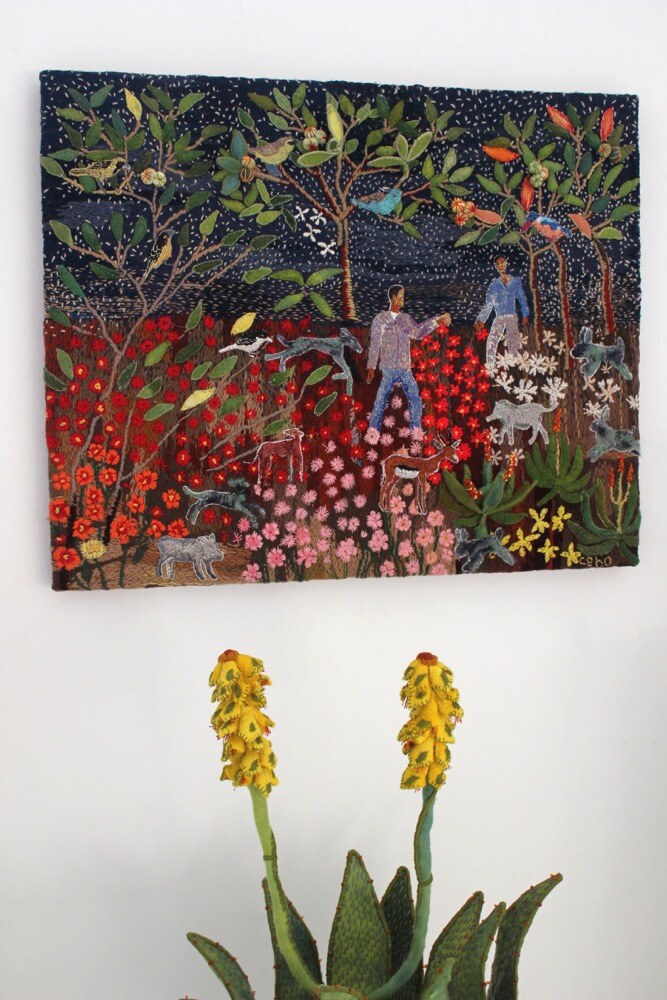
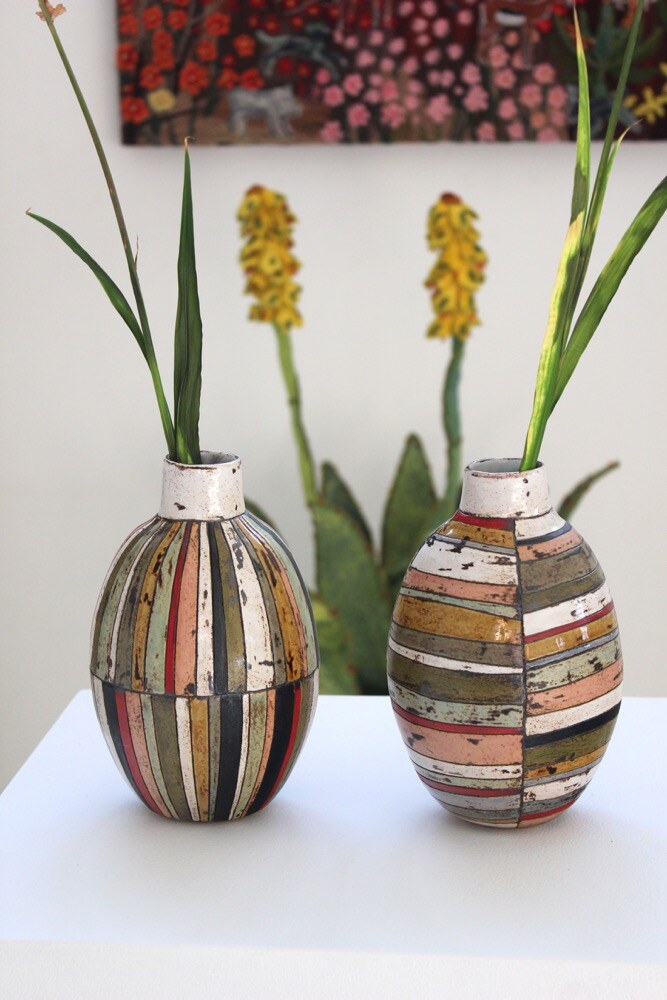
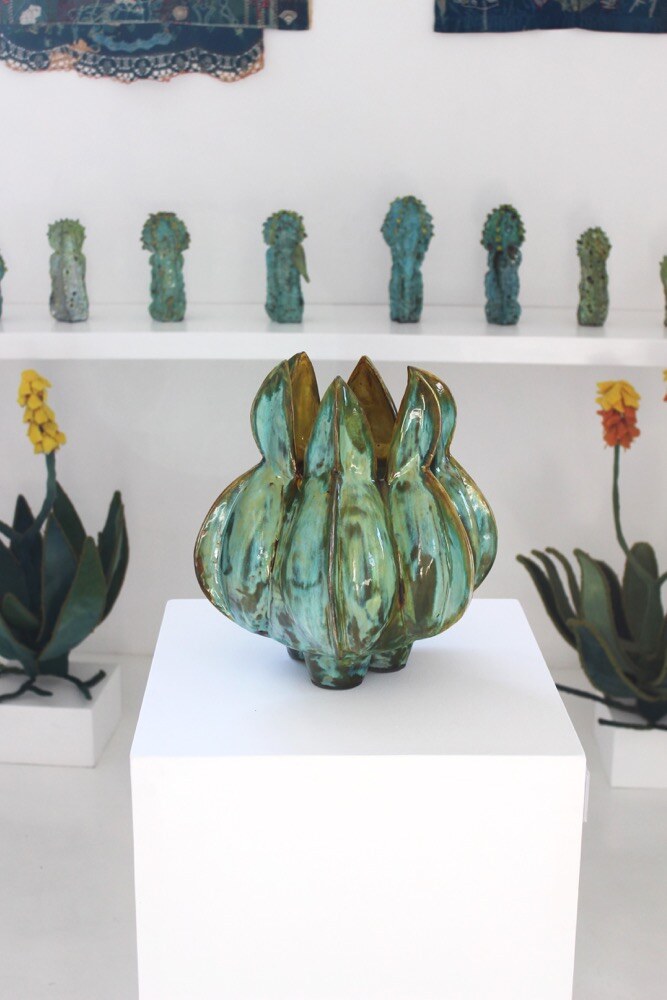
You enter through Zanzibari door frames, past a frontage that brings Malian architecture to mind and a flaming bougainvillea, to the sound of cattle bells. That is how the writer Robyn Sassen described arriving at the Kim Sacks Gallery for Business Day's Wanted in 2024. The ceramicist Eugene Hön, writing in 2011, noted that the building is painted a rich terracotta, close to the colour of Highveld soil. On busy Jan Smuts Avenue in Parkwood, it does not look like its neighbours, and it is not meant to.
Kim Sacks has run the gallery since 1986 and has kept it in this building since 1998. She is a potter first. On her own site she writes about the joy of being at one with her wheel, clay and thoughts, and both the school and the gallery grew out of that.
Ten years on the road
After her first 18 years in South Africa, Sacks spent a decade travelling, researching and documenting crafts and the way people relate to the things they make and use, her biography on the gallery site says. Textiles became a second lifelong love alongside clay. She trained in ceramics and glass at the Danish School of Design in Copenhagen, and when she came home in 1986 she founded the Kim Sacks School of Ceramics in Johannesburg. The gallery was established the same year.
Teaching has stayed at the centre. The school runs regular weekly classes for beginners and advanced students, an eight-week course for people who want to try before committing, and a gentle casual class on the last Friday of the month. There are electric and raku kilns, a library of ceramic literature and a museum collection of African ceramics. She teaches adults and children, and caters for people with disabilities. Writing about her approach, she separates the techniques of clay from something harder to teach: the ability to reach what she calls our unconscious creative selves. "I have no limits to what is potentially possible, with regard to working with clay," she writes. For newcomers she suggests eight classes as the minimum before anyone can tell whether they will take to clay.
Traders, makers and a weekly conversation
The gallery works on two fronts. One is contemporary: fine craft, folk art, rural creativity and urban design by makers across Southern Africa, some in very remote places and some in the middle of the city. The gallery's own text says what draws Sacks is resourcefulness, the kind that comes from having less rather than more.
The other front is older material culture. For 25 years, she writes, she has met traders every week as they pass through Johannesburg, sharing research and trading observations about collecting on the continent. She speaks reasonable French and some of several local languages, which helps. Because her interests run to both the contemporary and the old, she writes, she can gather a very broad range: masks, beadwork, baskets, calabashes, hats, textiles, leather and wood. In Your Pocket describes Sacks and her team as more like tour guides than shopping assistants.
Her own clay work continues beside all of this. She has written about pinched and coiled vessels made with minerals collected on her travels and scrapings from the rocks in her Johannesburg garden. After a raku firing at her school by her friend Paul de Jongh, a single bottle sent her back to the wheel for days of throwing white porcelain. She describes the pull of making as close to falling in love. "I become distracted when I am not making," she writes.
Shows with room to breathe
Exhibitions run through the year, and the gallery's archive lists them back to 2011, including several of work by Clementina van der Walt, two of them shared with Sacks herself. For Touch Wood in 2024, Wanted counted more than 200 pieces, from old Tutsi milk jugs mended with metal to animals carved from jacaranda root, shown in the purpose-built space behind the front gallery with no labels or prices interrupting the work. Her daughter Maia Lehr-Sacks contributed finely folded drawings.
The 2026 exhibition, In Bloom, brings together South African artists and collectives working in clay, wood, metal, paper, fibre and botanicals. Everything on it is for sale, and the gallery ships worldwide.
Kim Sacks Gallery is at 153 Jan Smuts Avenue, Parkwood; phone before you visit on +27 67 704 3926, or see kimsacks.com for classes and exhibitions.